
Weekly Updates
November 12, 2026
iM-Business Cycle Index
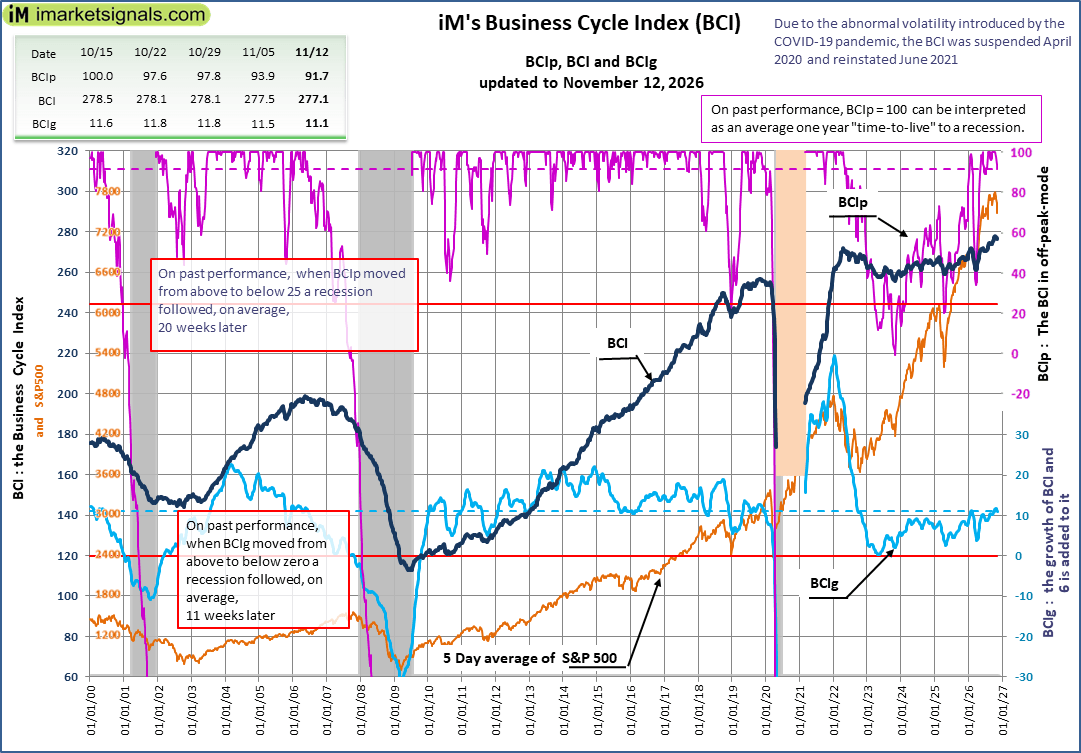
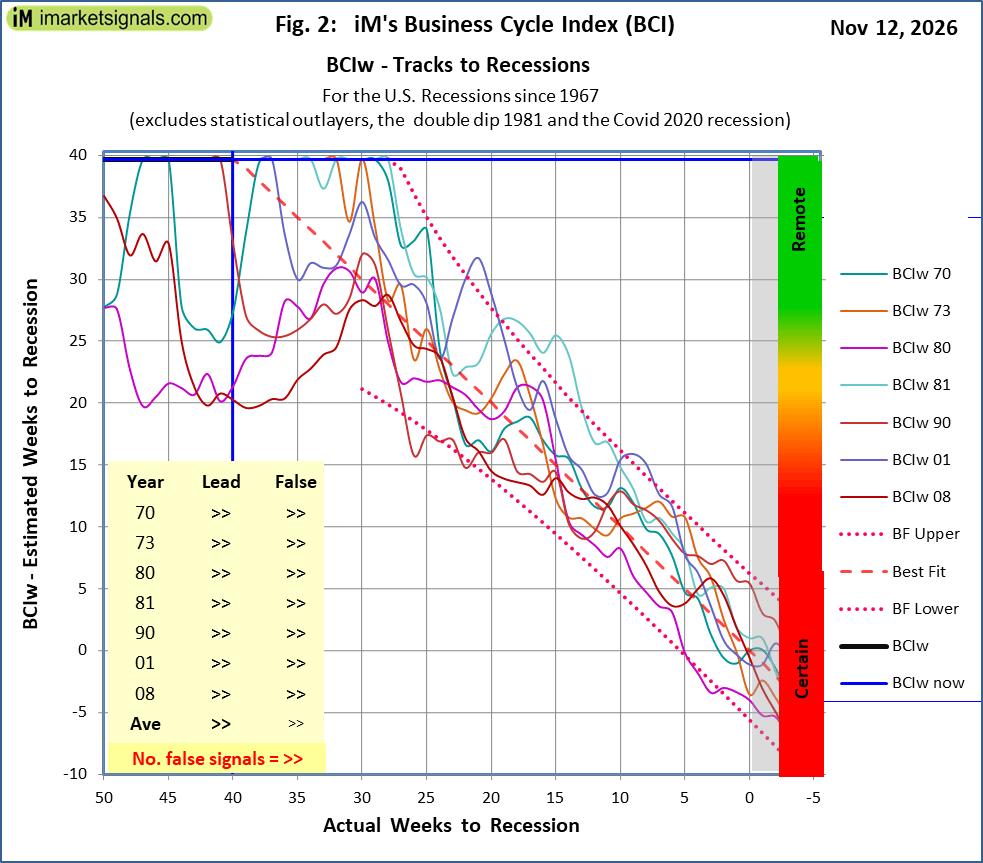 The BCI is not signalling a recession
November 10, 2026
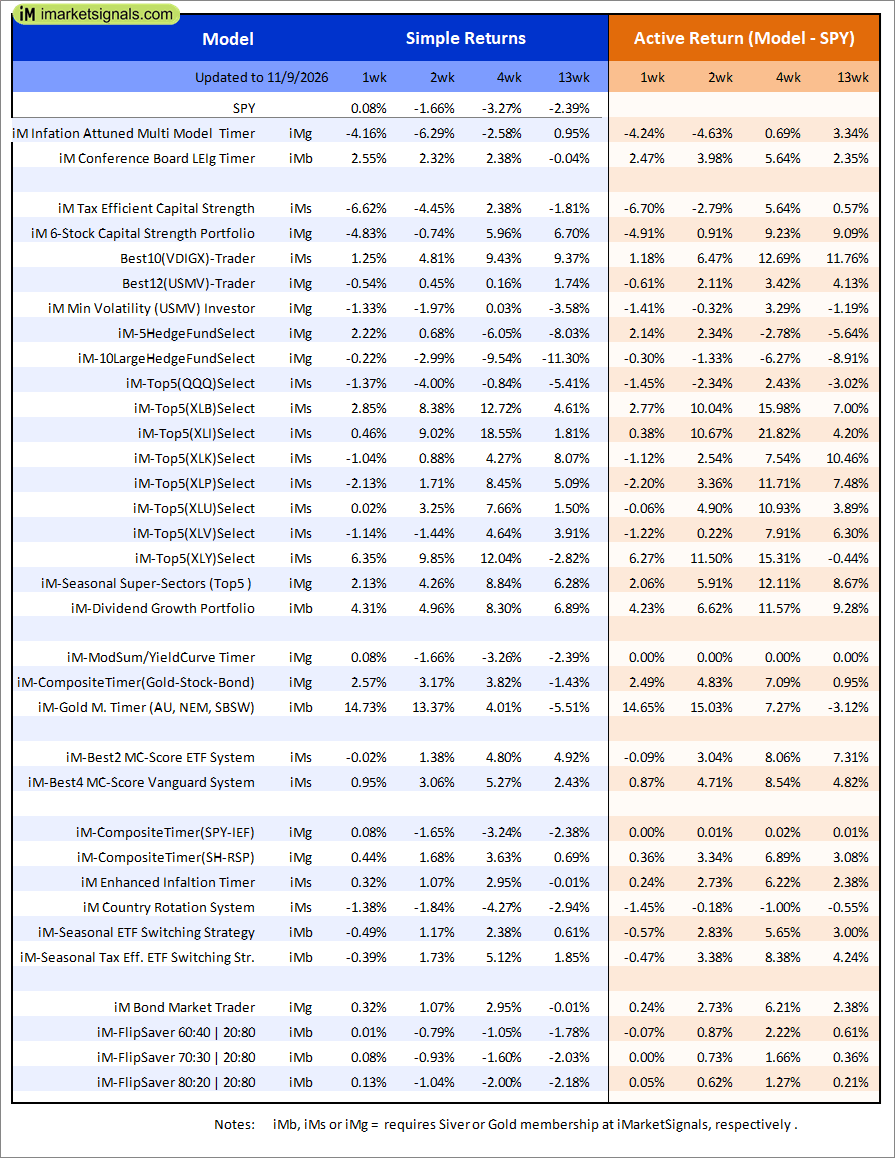 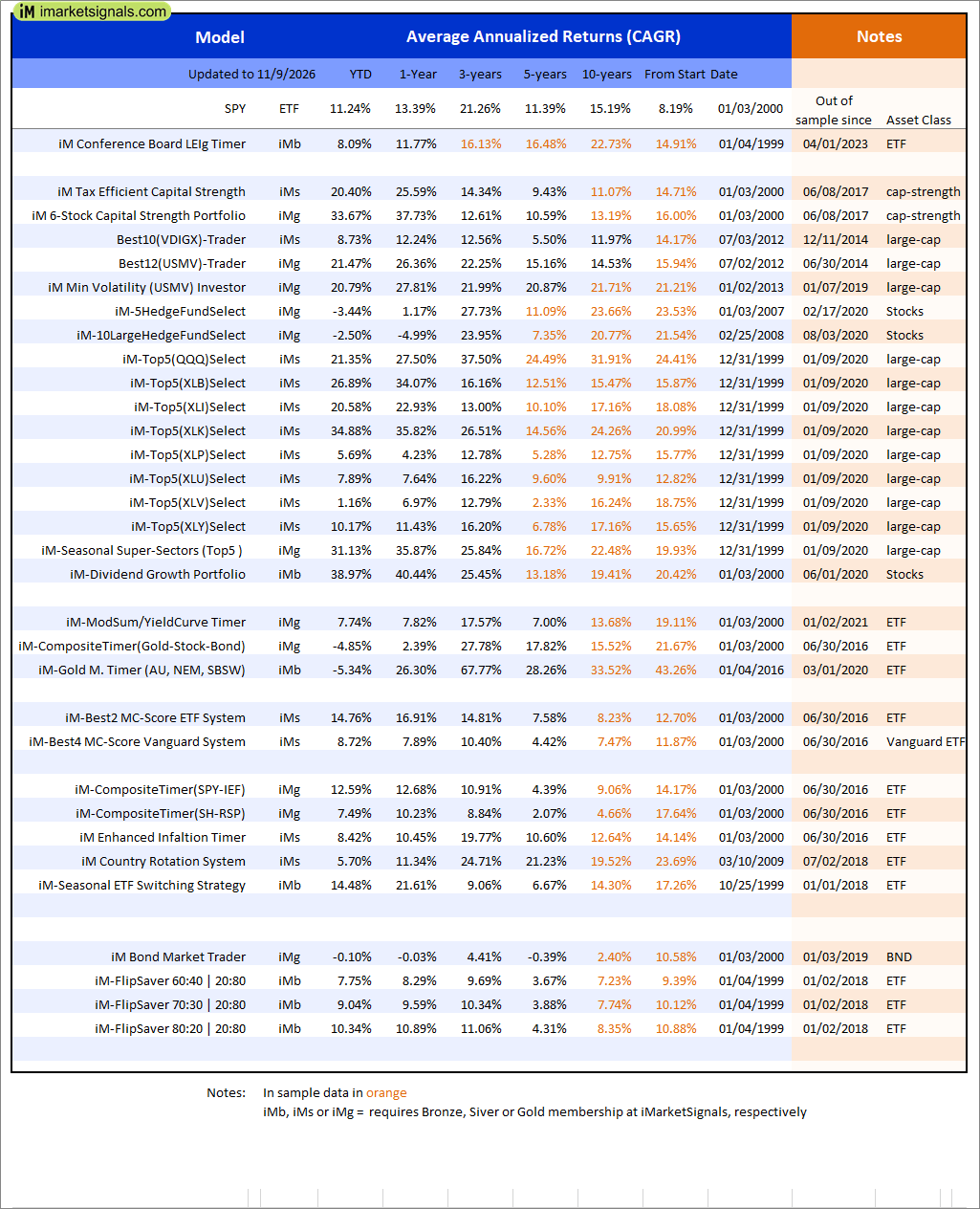 |
Out of sample performance summary of our models for the past 1, 2, 4 and 13 week periods. The active active return indicates how the models over- or underperformed the benchmark ETF SPY. Also the YTD, and the 1-, 3-, 5- and 10-year annualized returns are shown in the second table |
 |
iM-Inflation Attuned Multi-Model Market Timer: The model’s out of sample performance YTD is 6.4%, and for the last 12 months is 7.2%. Over the same period the benchmark SPY performance was 11.2% and 13.4% respectively. Over the previous week the market value of the iM-Inflation Attuned Multi-Model Market Timer gained -4.16% at a time when SPY gained 0.08%. A starting capital of $100,000 at inception on 3/24/2017 would have grown to $162,968,100 which includes $4,109,301 cash and excludes $4,103,439 spent on fees and slippage. |
|
|
iM-Conference Board LEIg Timer: The model’s performance YTD is 14.3%, and for the last 12 months is 7.3%. Over the same period the benchmark SPY performance was 20.1% and 9.4% respectively. Over the previous week the market value of the iM-Conference Board LEIg Timer gained -0.06% at a time when SPY gained 0.08%. A starting capital of $100,000 at inception on 4/5/2017 would have grown to $779,824 which includes $9,534 cash and excludes $769 spent on fees and slippage. |
| iM-FlipSaver 60:40 | 20:80 – 2017: The model’s out of sample performance YTD is 7.8%, and for the last 12 months is 8.3%. Over the same period the benchmark E60B40 performance was 6.8% and 8.2% respectively. Over the previous week the market value of iM-FlipSaver 80:20 | 20:80 gained 0.02% at a time when SPY gained 0.25%. A starting capital of $100,000 at inception on 7/16/2015 would have grown to $193,339 which includes $484 cash and excludes $5,614 spent on fees and slippage. | |
| iM-FlipSaver 70:30 | 20:80 – 2017: The model’s out of sample performance YTD is 9.0%, and for the last 12 months is 9.6%. Over the same period the benchmark E60B40 performance was 6.8% and 8.2% respectively. Over the previous week the market value of iM-FlipSaver 70:30 | 20:80 gained 0.08% at a time when SPY gained 0.25%. A starting capital of $100,000 at inception on 7/15/2015 would have grown to $203,723 which includes $916 cash and excludes $5,886 spent on fees and slippage. | |
| iM-FlipSaver 80:20 | 20:80 – 2017: The model’s out of sample performance YTD is 10.3%, and for the last 12 months is 10.9%. Over the same period the benchmark E60B40 performance was 6.8% and 8.2% respectively. Over the previous week the market value of iM-FlipSaver 80:20 | 20:80 gained 0.13% at a time when SPY gained 0.25%. A starting capital of $100,000 at inception on 1/2/2017 would have grown to $214,258 which includes $121 cash and excludes $6,150 spent on fees and slippage. | |
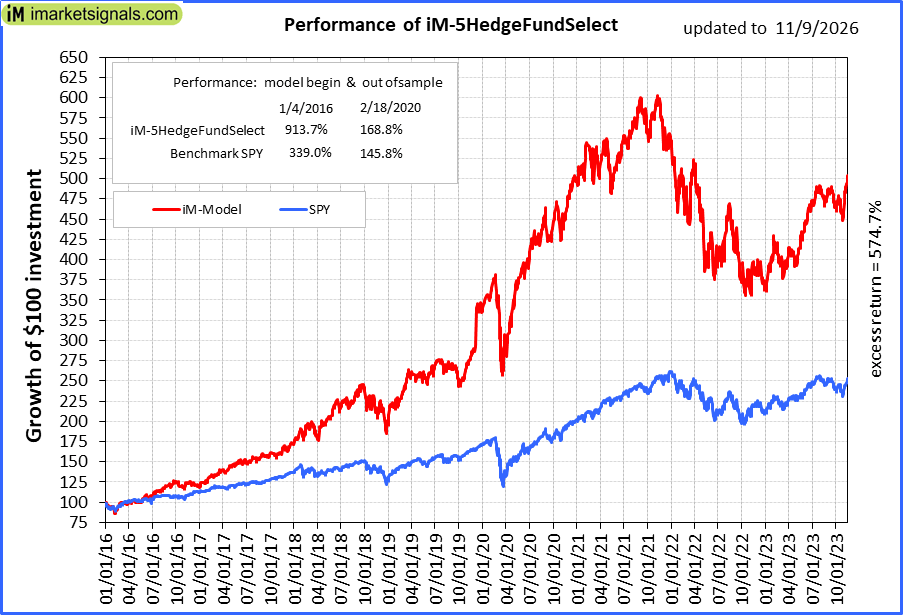 |
iM-5HedgeFundSelect: Since inception, on 1/5/2016, the model gained 913.69% while the benchmark SPY gained 339.02% over the same period. Over the previous week the market value of iM-5HedgeFundSelect gained 2.22% at a time when SPY gained 0.08%. A starting capital of $25,000 at inception on 1/5/2016 would have grown to $253,422 which includes -$3,574 cash and excludes $3,639 spent on fees and slippage. |
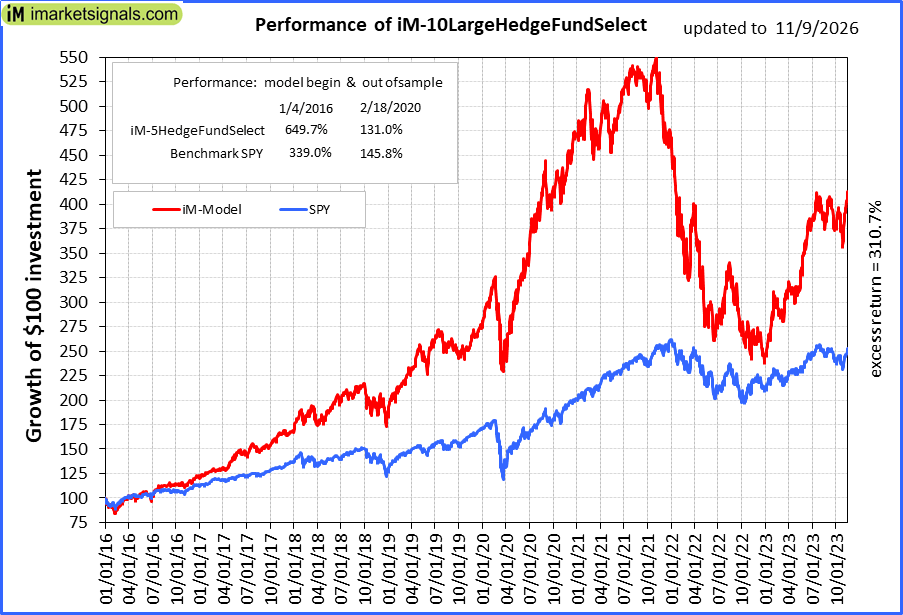 |
iM-10LargeHedgeFundSelect: Since inception, on 1/5/2016, the model gained 649.71% while the benchmark SPY gained 339.02% over the same period. Over the previous week the market value of iM-10LargeHedgeFundSelect gained -0.22% at a time when SPY gained 0.08%. A starting capital of $25,000 at inception on 1/5/2016 would have grown to $176,977 which includes -$10,400 cash and excludes $2,096 spent on fees and slippage. |
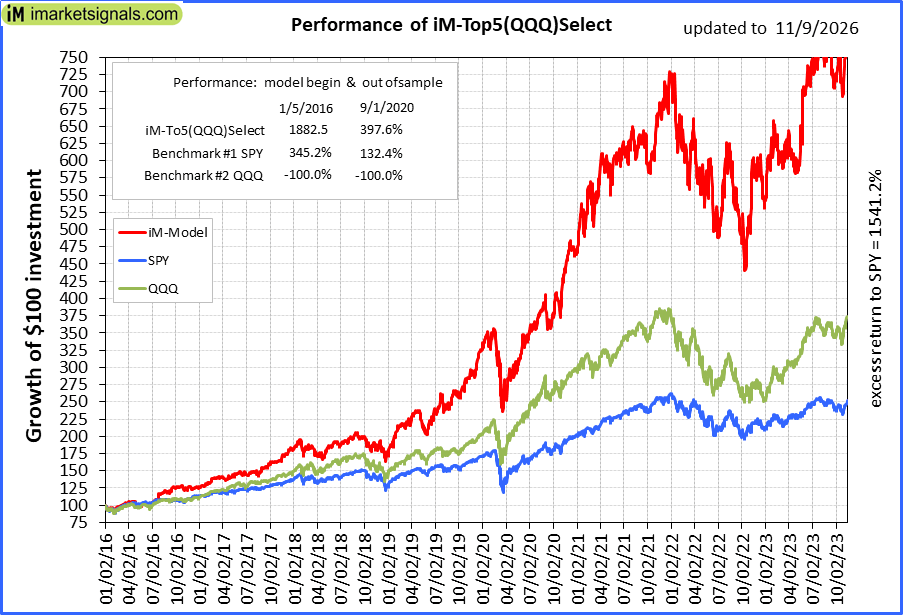 |
iM-Top5(QQQ)Select: Since inception, on 1/5/2016, the model gained 1880.24% while the benchmark SPY gained 339.02% over the same period. Over the previous week the market value of iM-Top5(QQQ)Select gained -1.37% at a time when SPY gained 0.08%. A starting capital of $100,000 at inception on 1/5/2016 would have grown to $1,980,243 which includes -$95,730 cash and excludes $37,919 spent on fees and slippage. |
 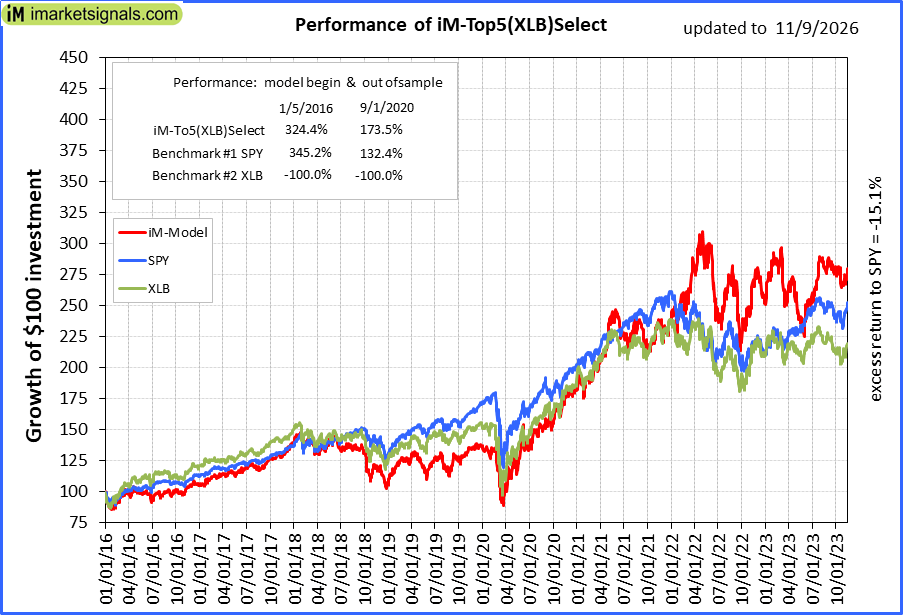 |
iM-Top5(XLB)Select: Since inception, on 1/5/2016, the model gained 323.91% while the benchmark SPY gained 339.02% over the same period. Over the previous week the market value of iM-Top5(XLB)Select gained 2.85% at a time when SPY gained 0.08%. A starting capital of $100,000 at inception on 1/5/2016 would have grown to $423,912 which includes $4,415 cash and excludes $18,262 spent on fees and slippage. |
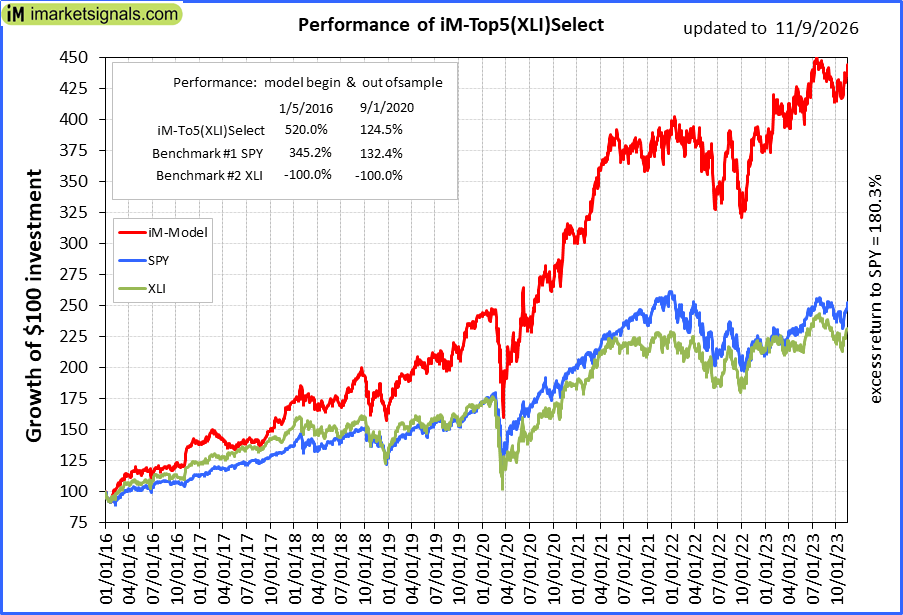 |
iM-Top5(XLI)Select: Since inception, on 1/5/2016, the model gained 519.31% while the benchmark SPY gained 339.02% over the same period. Over the previous week the market value of iM-Top5(XLI)Select gained 0.46% at a time when SPY gained 0.08%. A starting capital of $100,000 at inception on 1/5/2016 would have grown to $619,308 which includes -$3,644 cash and excludes $10,452 spent on fees and slippage. |
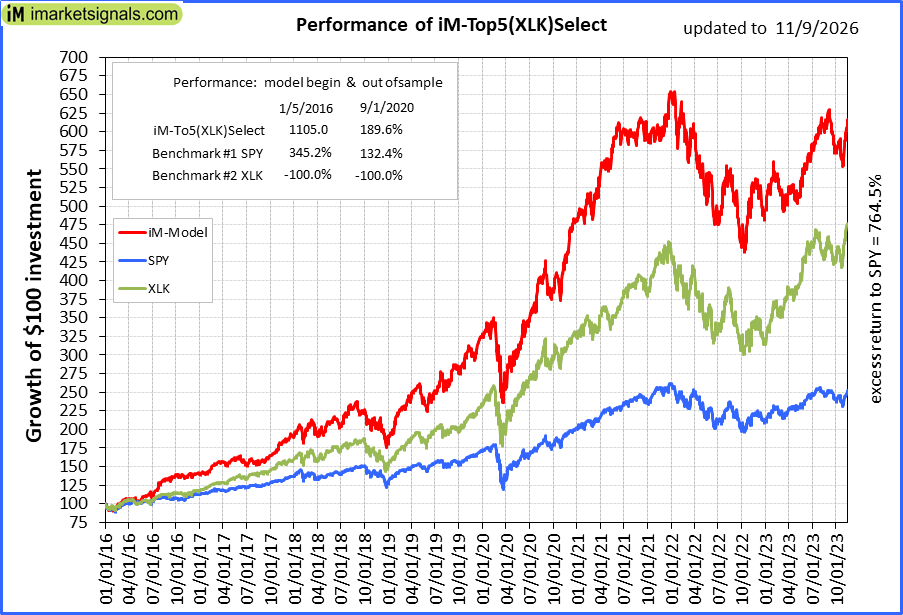 |
iM-Top5(XLK)Select: Since inception, on 1/5/2016, the model gained 1103.48% while the benchmark SPY gained 339.02% over the same period. Over the previous week the market value of iM-Top5(XLK)Select gained -1.04% at a time when SPY gained 0.08%. A starting capital of $100,000 at inception on 1/5/2016 would have grown to $1,203,477 which includes $3,792 cash and excludes $4,453 spent on fees and slippage. |
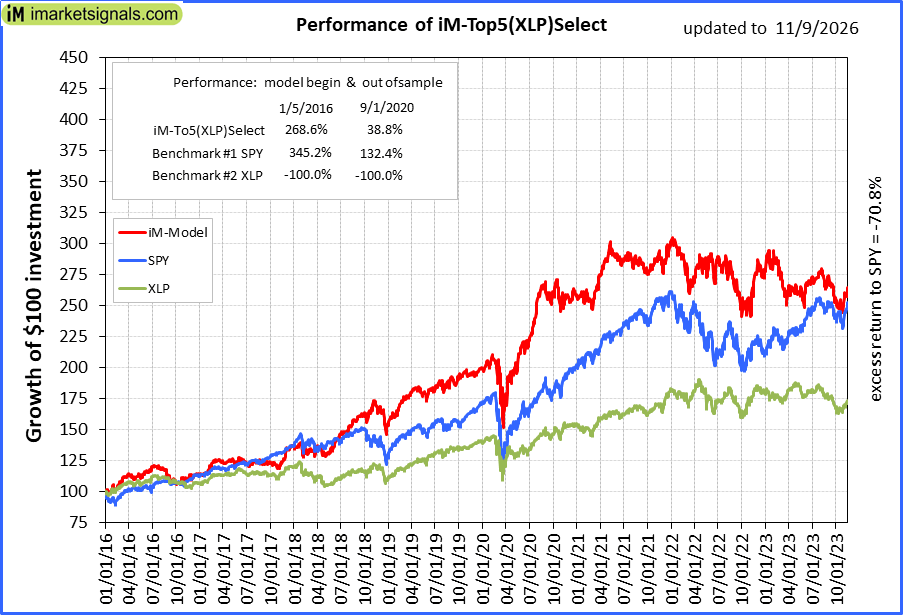 |
iM-Top5(XLP)Select: Since inception, on 1/5/2016, the model gained 268.20% while the benchmark SPY gained 339.02% over the same period. Over the previous week the market value of iM-Top5(XLP)Select gained -2.13% at a time when SPY gained 0.08%. A starting capital of $100,000 at inception on 1/5/2016 would have grown to $368,199 which includes -$658 cash and excludes $3,653 spent on fees and slippage. |
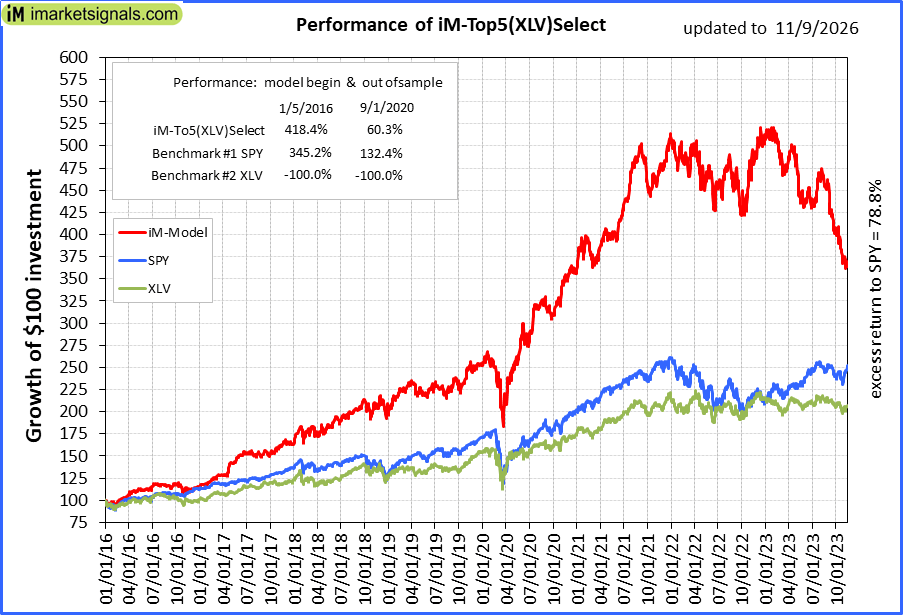 |
iM-Top5(XLV)Select: Since inception, on 1/5/2016, the model gained 417.78% while the benchmark SPY gained 339.02% over the same period. Over the previous week the market value of iM-Top5(XLV)Select gained -1.14% at a time when SPY gained 0.08%. A starting capital of $100,000 at inception on 1/5/2016 would have grown to $517,783 which includes $3,604 cash and excludes $20,953 spent on fees and slippage. |
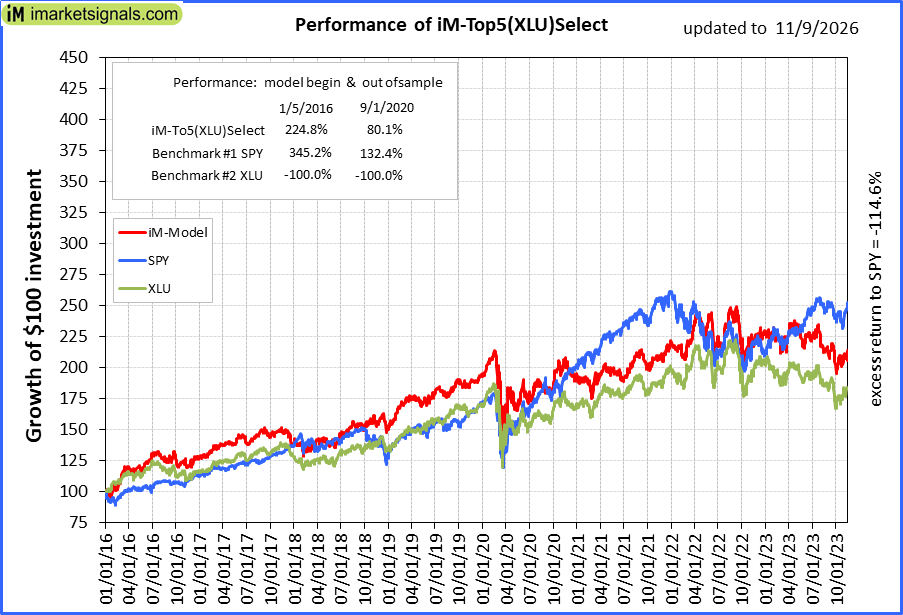 |
iM-Top5(XLU)Select: Since inception, on 1/5/2016, the model gained 224.40% while the benchmark SPY gained 339.02% over the same period. Over the previous week the market value of iM-Top5(XLU)Select gained 0.02% at a time when SPY gained 0.08%. A starting capital of $100,000 at inception on 1/5/2016 would have grown to $324,398 which includes -$459 cash and excludes $19,368 spent on fees and slippage. |
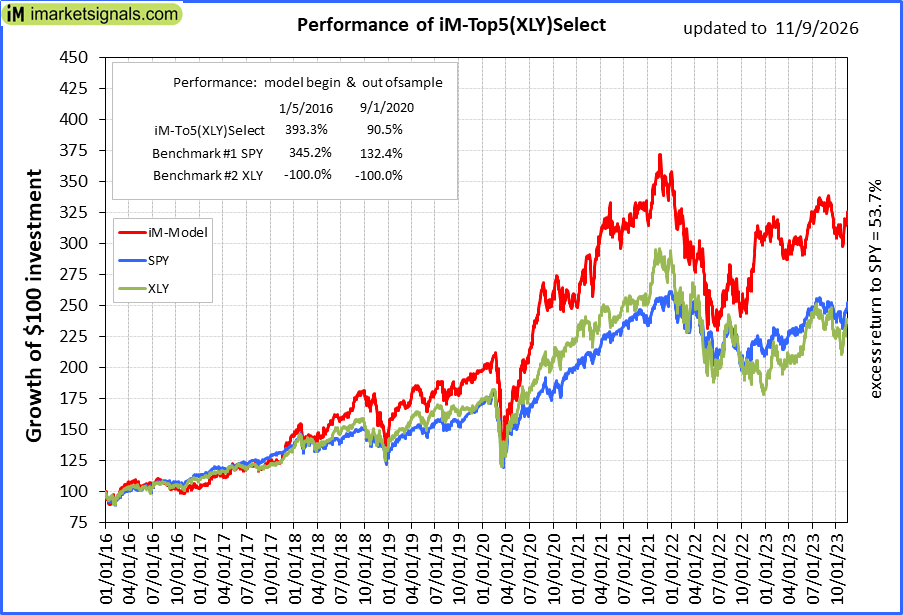 |
iM-Top5(XLY)Select: Since inception, on 1/5/2016, the model gained 392.69% while the benchmark SPY gained 339.02% over the same period. Over the previous week the market value of iM-Top5(XLY)Select gained 6.35% at a time when SPY gained 0.08%. A starting capital of $100,000 at inception on 1/5/2016 would have grown to $492,689 which includes $480 cash and excludes $8,975 spent on fees and slippage. |
|
|
iM-Seasonal Super-Sectors (Top5 combo) : Since inception, on 11/17/2020, the model gained 170.92% while the benchmark SPY gained 127.90% over the same period. Over the previous week the market value of iM-Seasonal Super-Sectors (Top5 combo) gained 2.13% at a time when SPY gained 0.08%. A starting capital of $100,000 at inception on 11/17/2020 would have grown to $270,916 which includes $12,385 cash and excludes $00 spent on fees and slippage. |
| iM-Dividend Growth Portfolio: The model’s out of sample performance YTD is 38.1%, and for the last 12 months is 40.0%. Over the same period the benchmark SPY performance was 11.2% and 13.4% respectively. Over the previous week the market value of the iM-Dividend Growth Portfolio gained 4.20% at a time when SPY gained 0.08%. A starting capital of $100,000 at inception on 6/30/2016 would have grown to $735,491 which includes -$1,525 cash and excludes $16,331 spent on fees and slippage. | |
| iM-Gold Momentum Timer (AU, NEM, SBSW): The model’s out of sample performance YTD is -5.3%, and for the last 12 months is 26.3%. Over the same period the benchmark SPY performance was 11.2% and 13.4% respectively. Over the previous week the market value of iM-Gold Momentum Timer (AU, NEM, SBSW) gained 14.73% at a time when SPY gained 0.08%. A starting capital of $100,000 at inception on 6/30/2016 would have grown to -$08 which includes $306,794 cash and excludes Gain to date spent on fees and slippage. | |
|
|
iM-ModSum/YieldCurve Timer: The model’s out of sample performance YTD is 7.7%, and for the last 12 months is 7.8%. Over the same period the benchmark SPY performance was 11.2% and 13.4% respectively. Over the previous week the market value of iM-PortSum/YieldCurve Timer gained 0.08% at a time when SPY gained 0.08%. A starting capital of $100,000 at inception on 1/1/2016 would have grown to $412,619 which includes $144 cash and excludes $2,605 spent on fees and slippage. |
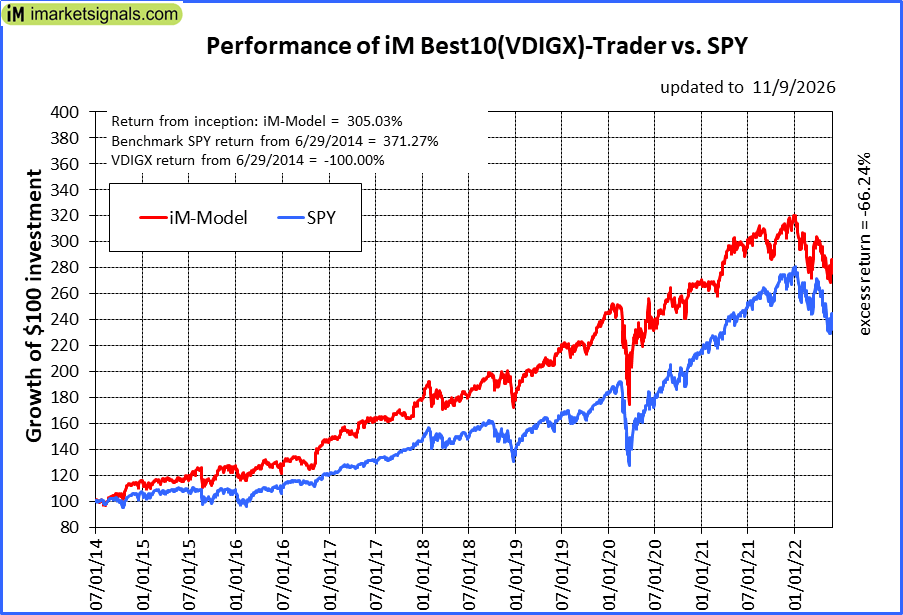 |
iM-Best10(VDIGX)-Trader: The model’s out of sample performance YTD is 8.7%, and for the last 12 months is 12.0%. Over the same period the benchmark SPY performance was 11.2% and 13.4% respectively. Since inception, on 7/1/2014, the model gained 305.03% while the benchmark SPY gained 371.27% and VDIGX gained -100.00% over the same period. Over the previous week the market value of iM-Best10(VDIGX) gained 1.00% at a time when SPY gained 0.08%. A starting capital of $100,000 at inception on 7/1/2014 would have grown to $405,029 which includes $1,122 cash and excludes $5,837 spent on fees and slippage. |
|
|
iM 6-Stock Capital Strength Portfolio: The model’s out of sample performance YTD is 33.0%, and for the last 12 months is 37.7%. Over the same period the benchmark SPY performance was 11.2% and 13.4% respectively. Over the previous week the market value of the iM 6-Stock Capital Strength Portfolio gained -4.98% at a time when SPY gained 0.08%. A starting capital of $100,000 at inception on 10/28/2016 would have grown to $341,637 which includes $2,124 cash and excludes $4,946 spent on fees and slippage. |
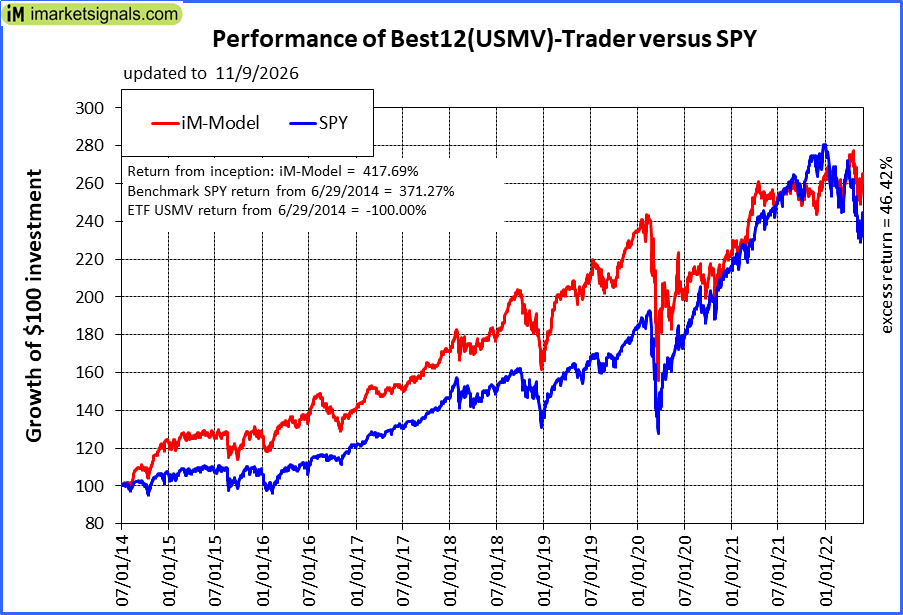 |
iM-Best12(USMV)-Trader: The model’s out of sample performance YTD is 21.2%, and for the last 12 months is 26.4%. Over the same period the benchmark SPY performance was 11.2% and 13.4% respectively. Since inception, on 6/30/2014, the model gained 417.69% while the benchmark SPY gained 371.27% and the ETF USMV gained -100.00% over the same period. Over the previous week the market value of iM-Best12(USMV)-Trader gained -0.54% at a time when SPY gained 0.08%. A starting capital of $100,000 at inception on 6/30/2014 would have grown to $517,688 which includes $790 cash and excludes $9,319 spent on fees and slippage. |
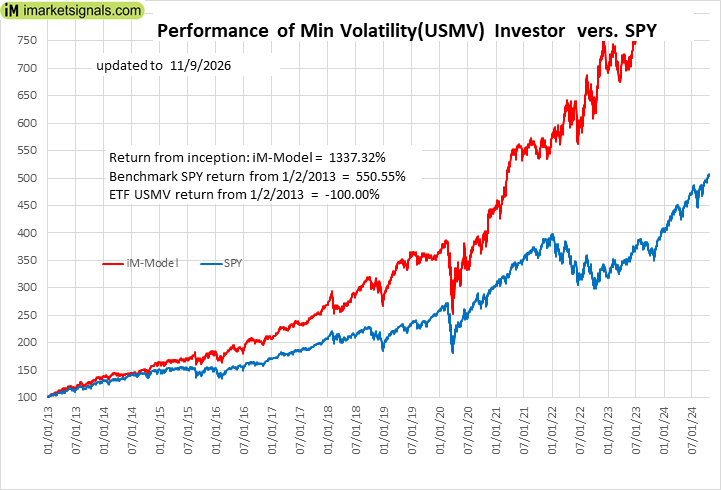 |
iM-Min Volatility(USMV) Investor (Tax Efficient): The model’s out of sample performance YTD is 20.8%, and for the last 12 months is 27.8%. Over the same period the benchmark SPY performance was 11.2% and 13.4% respectively. Since inception, on 1/3/2013, the model gained 1337.32% while the benchmark SPY gained 550.55% and the ETF USMV gained -100.00% over the same period. Over the previous week the market value of iM-Best12(USMV)Q1 gained -1.33% at a time when SPY gained 0.08%. A starting capital of $100,000 at inception on 1/3/2013 would have grown to $1,437,323 which includes $2,143 cash and excludes $18,857 spent on fees and slippage. |
|
|
iM-Bond Market Trader (High-Yield Bond or 10-yr Treasury Bond): The model’s out of sample performance YTD is -0.1%, and for the last 12 months is 0.0%. Over the same period the benchmark BND performance was 0.0% and 0.3% respectively. Over the previous week the market value of the iM-Bond Market Trader (High-Yield Bond or 10-yr Treasury Bond) gained 0.32% at a time when BND gained 0.41%. A starting capital of $10,000 at inception on 1/3/2000 would have grown to $148,949 which includes $2,987 cash and excludes $2,977 spent on fees and slippage. |
|
|
iM-ModSum/YieldCurve Timer: The model’s out of sample performance YTD is 7.7%, and for the last 12 months is 7.8%. Over the same period the benchmark SPY performance was 11.2% and 13.4% respectively. Over the previous week the market value of iM-PortSum/YieldCurve Timer gained 0.08% at a time when SPY gained 0.08%. A starting capital of $100,000 at inception on 1/1/2016 would have grown to $412,619 which includes $144 cash and excludes $2,605 spent on fees and slippage. |
|
|
iM-Best2 MC-Score ETF System: The model’s out of sample performance YTD is 14.7%, and for the last 12 months is 16.9%. Over the same period the benchmark SPY performance was 11.2% and 13.4% respectively. Over the previous week the market value of the iM-Best2 MC-Score ETF System gained -0.02% at a time when SPY gained 0.08%. A starting capital of $100,000 at inception on 6/30/2016 would have grown to $215,903 which includes $2,974 cash and excludes $5,779 spent on fees and slippage. |
|
|
iM-Best4 MC-Score Vanguard System: The model’s out of sample performance YTD is 8.7%, and for the last 12 months is 7.9%. Over the same period the benchmark SPY performance was 11.2% and 13.4% respectively. Over the previous week the market value of the iM-Best4 MC-Score Vanguard System gained 0.95% at a time when SPY gained 0.08%. A starting capital of $100,000 at inception on 6/30/2016 would have grown to $198,829 which includes $9,076 cash and excludes $00 spent on fees and slippage. |
|
|
iM-Composite (SPY-IEF) Timer: The model’s out of sample performance YTD is 12.6%, and for the last 12 months is 12.7%. Over the same period the benchmark SPY performance was 11.2% and 13.4% respectively. Over the previous week the market value of the iM-Composite (SPY-IEF) Timer gained 0.08% at a time when SPY gained 0.08%. A starting capital of $100,000 at inception on 6/30/2016 would have grown to $243,770 which includes $2,156 cash and excludes $8,651 spent on fees and slippage. |
|
|
iM-Composite(Gold-Stocks-Bond) Timer: The model’s out of sample performance YTD is -4.8%, and for the last 12 months is 2.4%. Over the same period the benchmark SPY performance was 11.2% and 13.4% respectively. Over the previous week the market value of the iM-Composite(Gold-Stocks-Bond) Timer gained 2.57% at a time when SPY gained 0.08%. A starting capital of $100,000 at inception on 6/30/2016 would have grown to $384,241 which includes $758 cash and excludes $12,351 spent on fees and slippage. |
October 30, 2026
Bond-market:
To view this premium content requires membership category: Bronze or higher. However, it can be freely viewed after 11-27-2026 16:00 UTC, or please login or register
The Yield Curve:
To view this premium content requires membership category: Bronze or higher. However, it can be freely viewed after 11-27-2026 16:00 UTC, or please login or register
Silver:
October 30, 2026
Stock-markets:
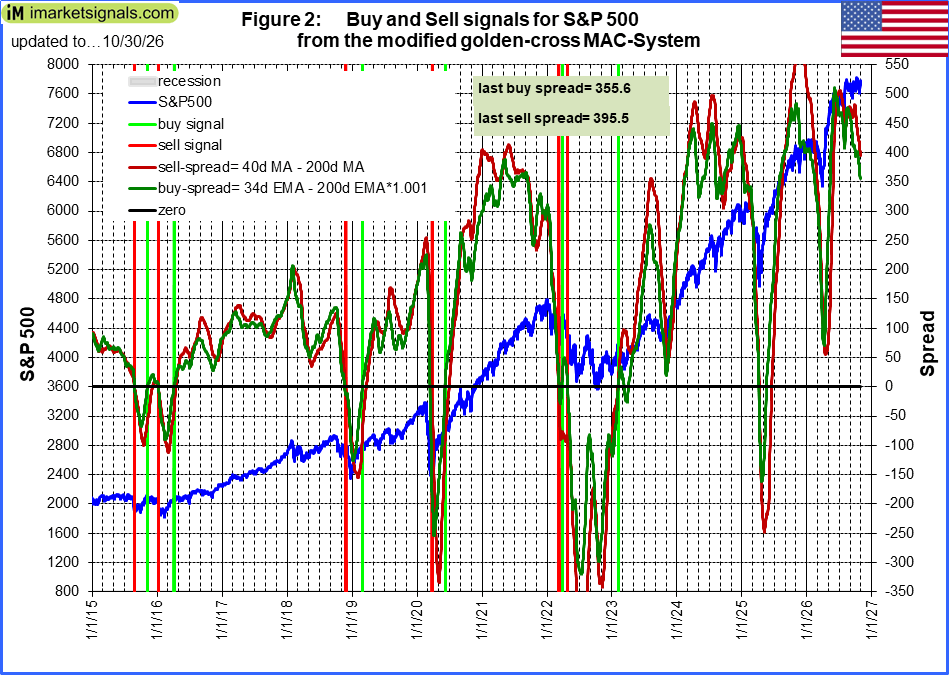 The MAC-US model is invested since mid June 2025,
.
To view this premium content requires membership category: Bronze or higher. However, it can be freely viewed after 11-27-2026 16:00 UTC, or please login or register
To view this premium content requires membership category: Bronze or higher. However, it can be freely viewed after 11-27-2026 16:00 UTC, or please login or register
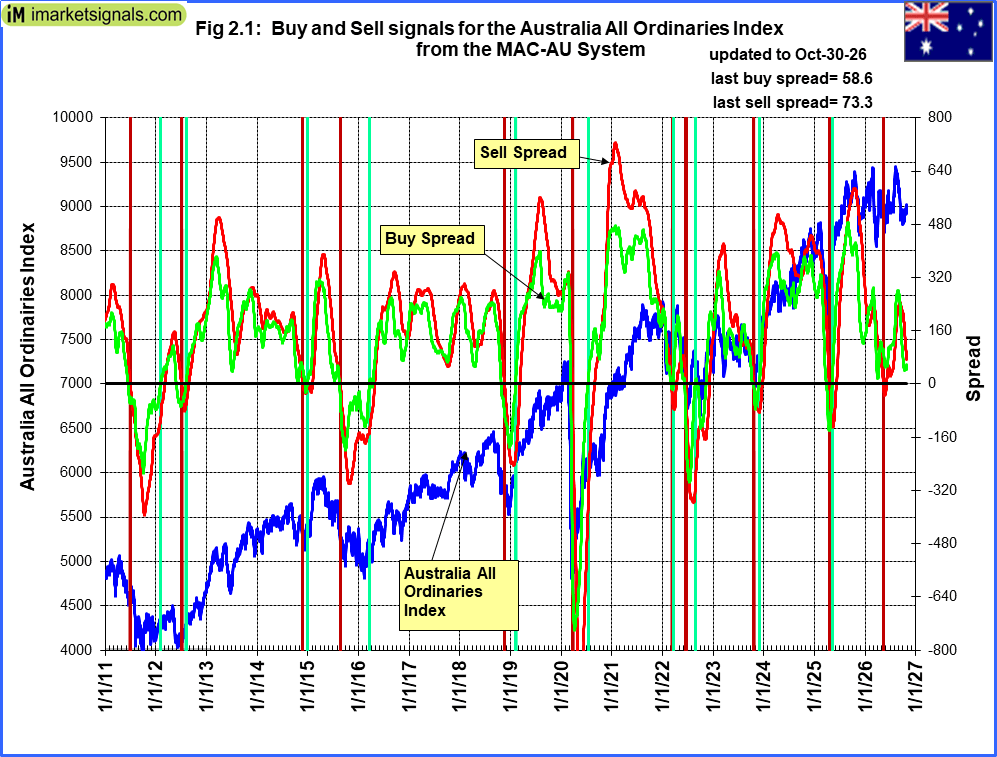 The MAC-AU model is dis-invested from the Australian stock market sine end April 2025.
This model and its application is described in MAC-Australia: A Moving Average Crossover System for Superannuation Asset Allocations.
Recession:
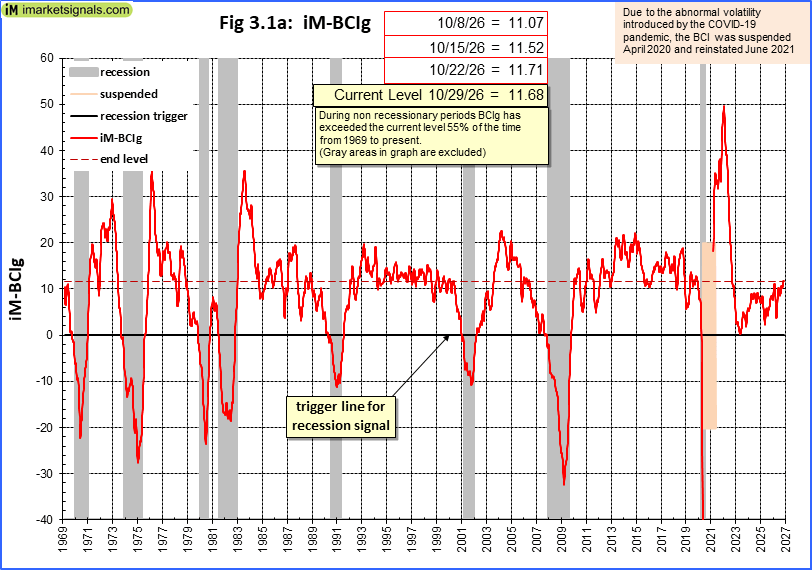 BCIg is not signaling a recession.
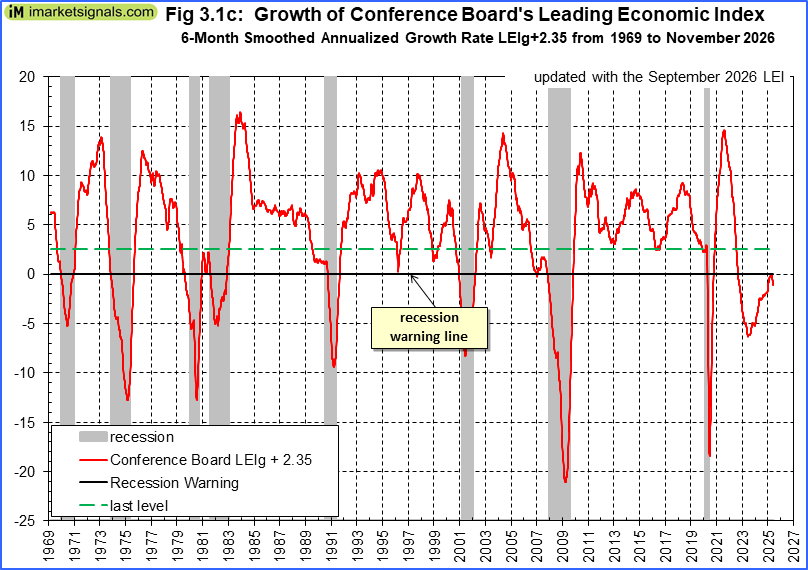 The growth of the Conference Board’s Leading Economic Indicator does not signal a recession.
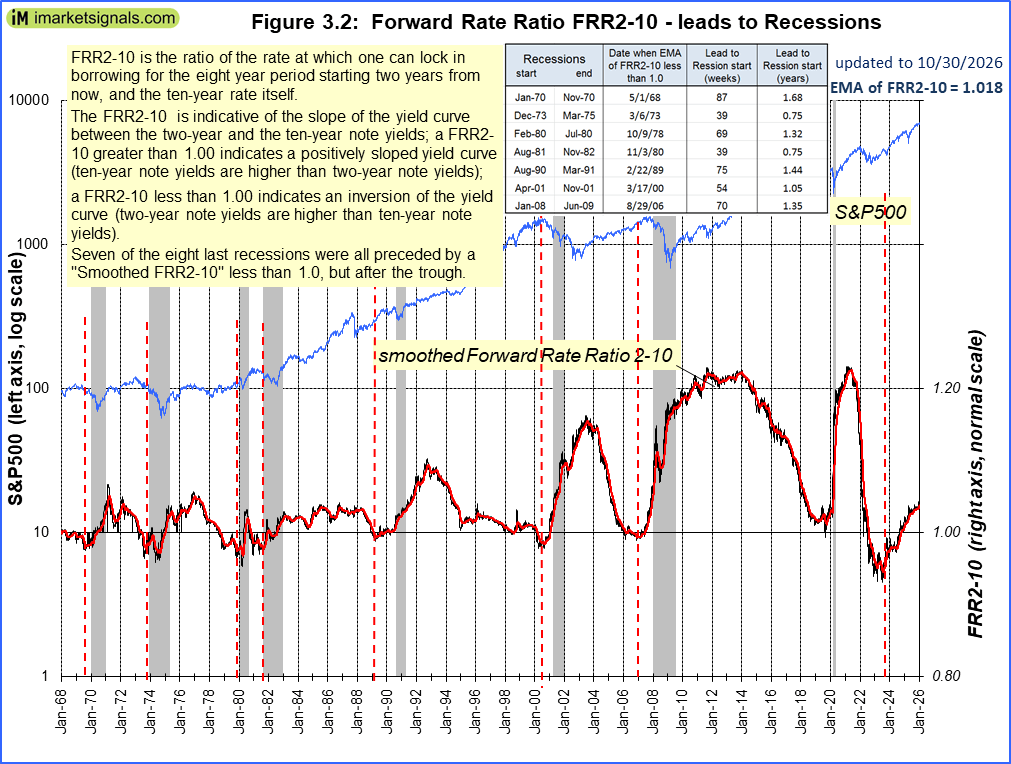 The Forward Rate Ratio between the 2-year and 10-year U.S. Treasury yields (FRR2-10) is no longer inverted and the curve is steepening.
A description of this indicator can be found here.
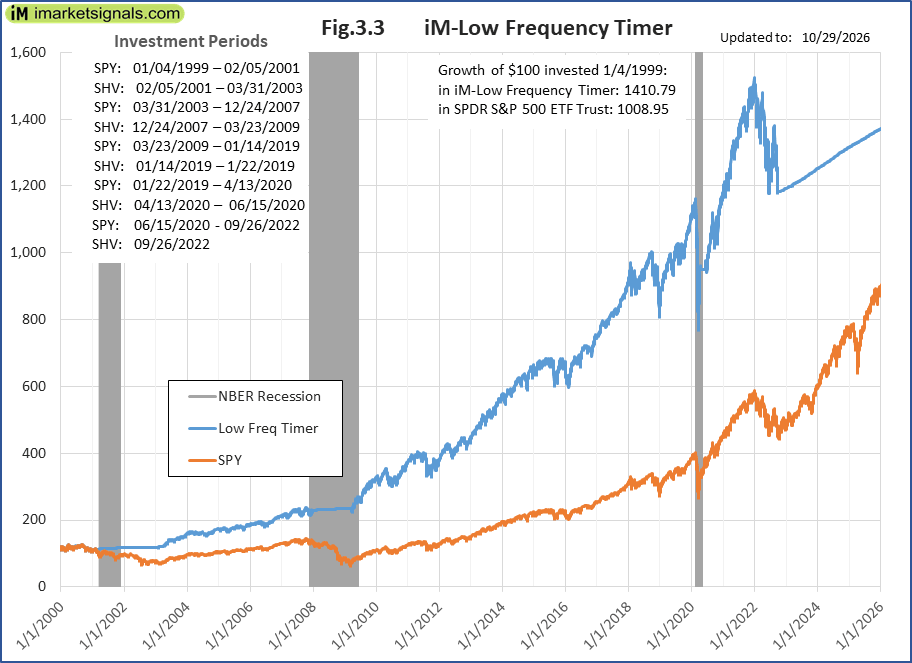 The iM-Low Frequency Timer switched to bonds on 9/26/2022.
A description of this indicator can be found here.
October 29, 2026
iM-Business Cycle Index
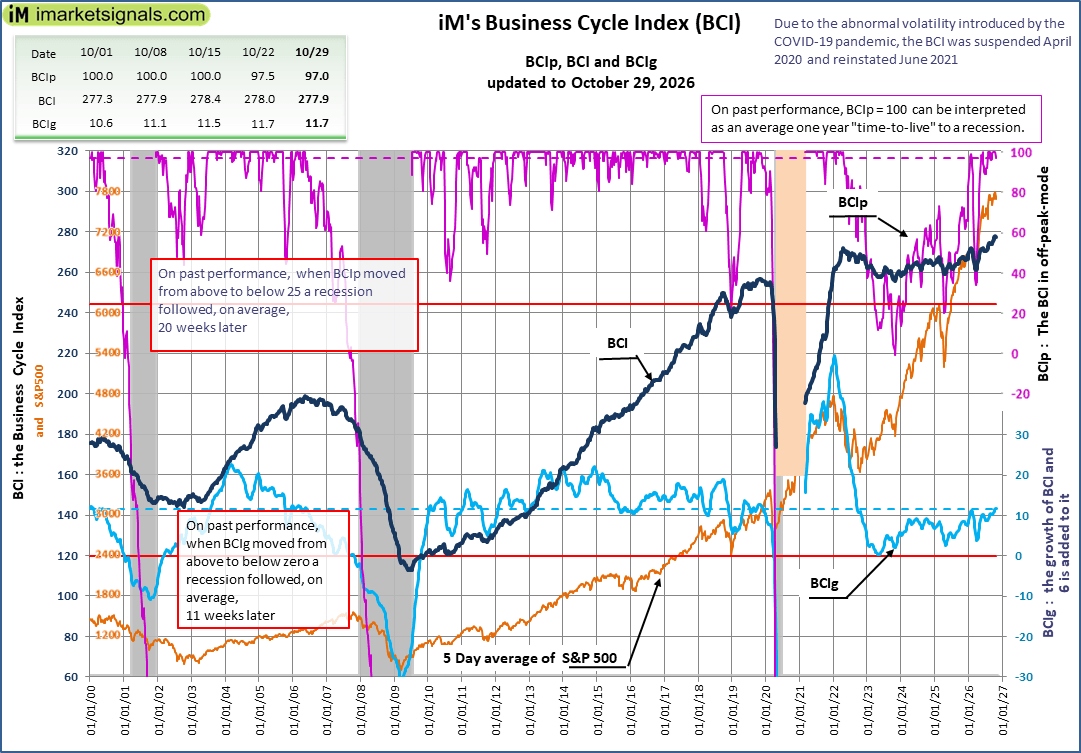
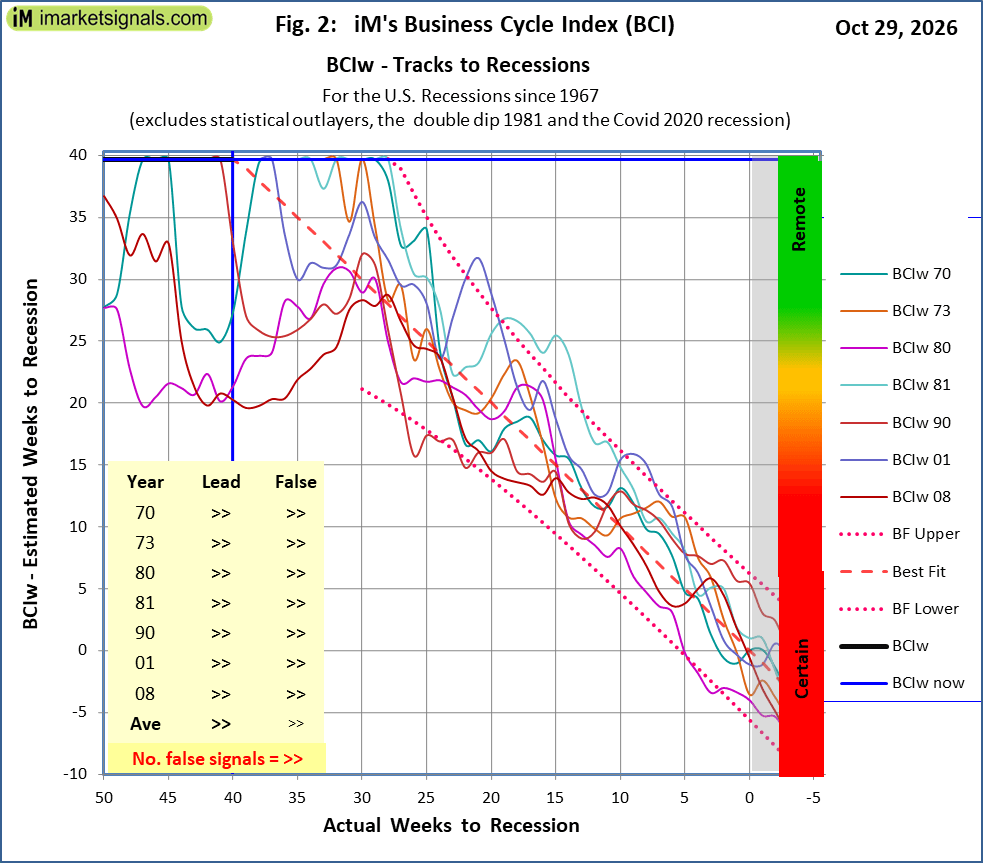 The BCI is not signalling a recession
Monthly Updates
May 8, 2026
Unemployment
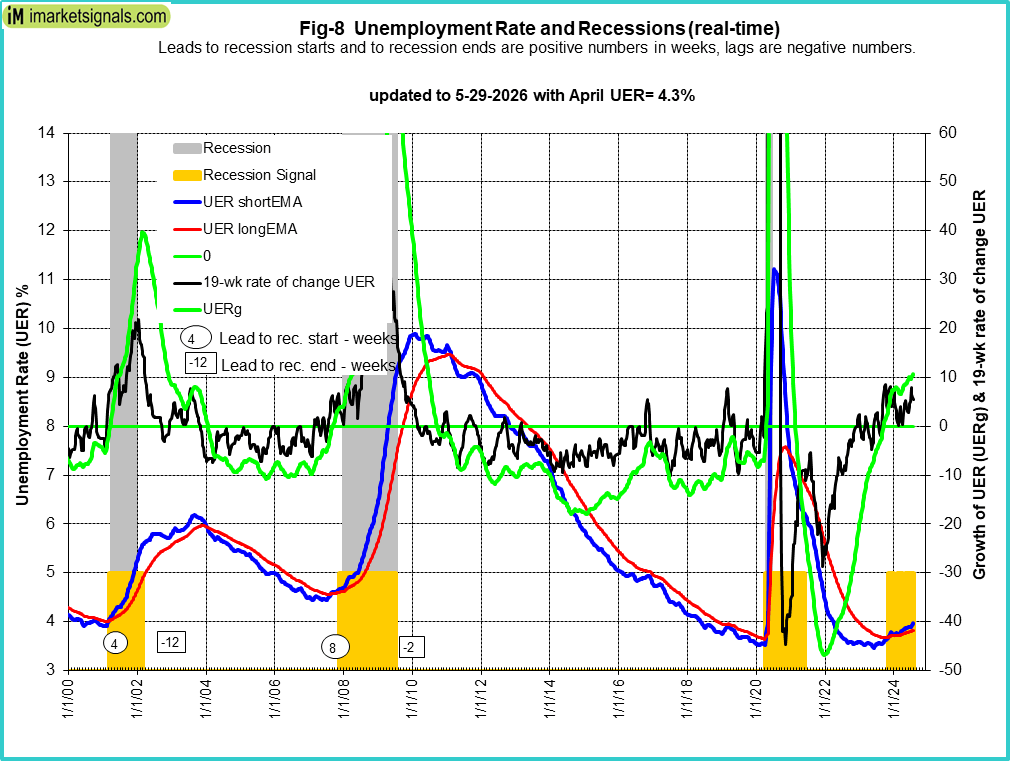
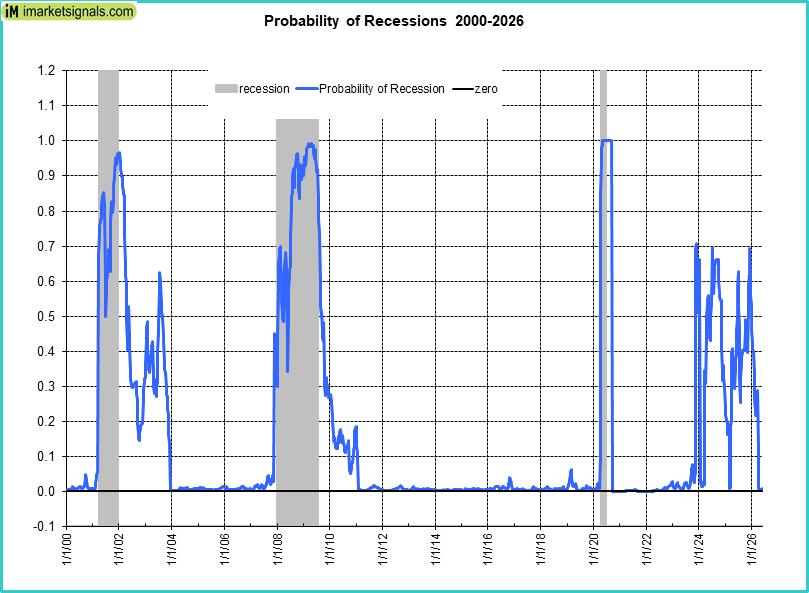
The 5/8/2026 BLS Employment Situation Report reports that the April 2026 unemployment rate remained unchanged at 4.3%.
Our UER model does signal a recession with a near zero recession probability of (see graph).
CAPE-Cycle-ID
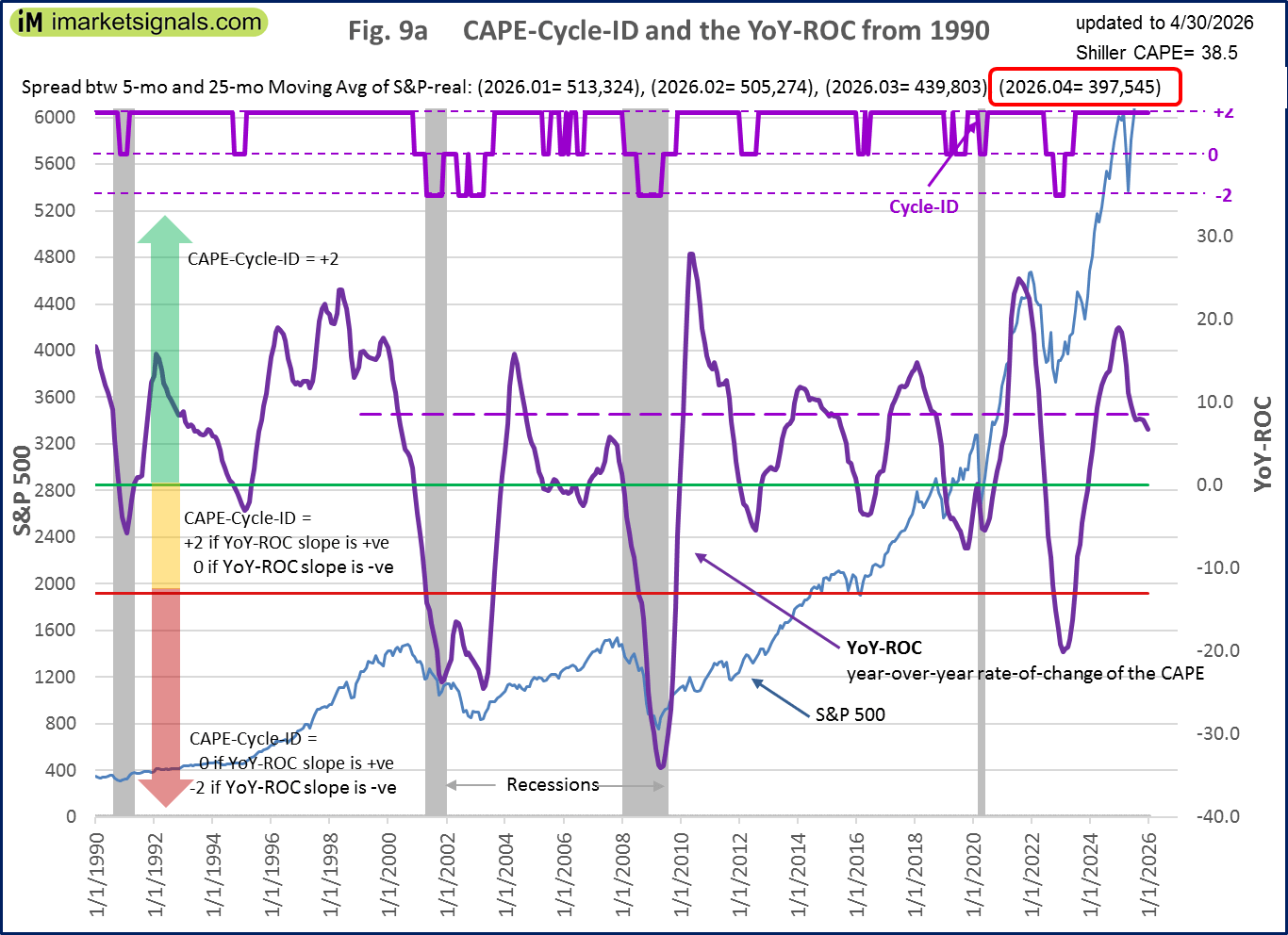 Fig 9a depicts the CAPE-Cycle-ID and the year-on-year rate-of-change of the Shiller CAPE; the level switched from -2 to 0 end of June 2023 generating a buy signal. This indicator now invested in the markets. This indicator is described here.
To avoid the bear market, exit stocks when the spread between the 5-month and 25-month moving averages of S&P-real becomes negative and simultaneously the CAPE-Cycle-ID score is 0 or -2. (read more)
Estimated Forward 10-Year Returns
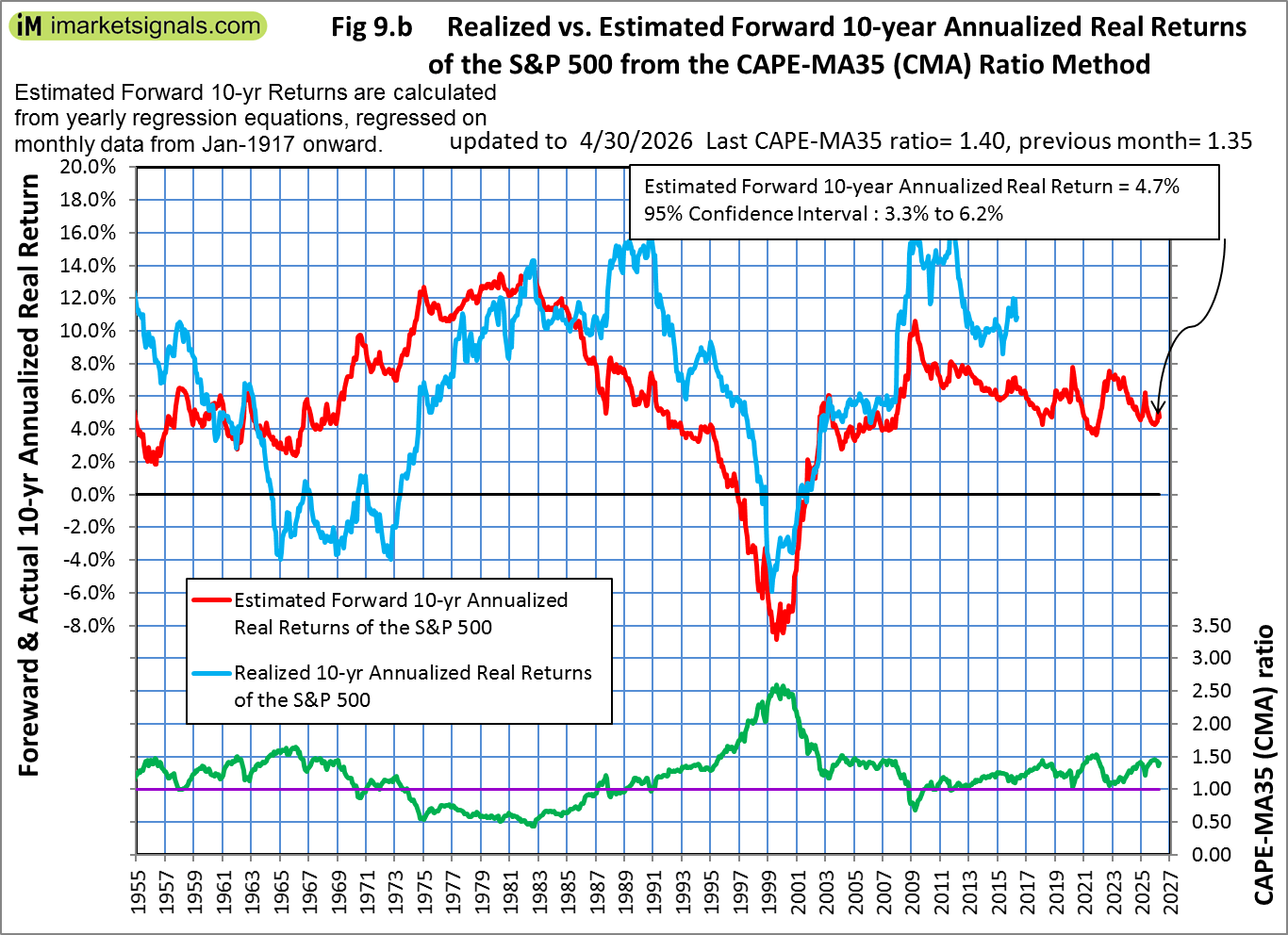 The estimated forward 10‐year annualized real return is 4.7% (previous month 5.0%) with a 95% confidence interval 3.3% to 6.2% (3.6% to 6.5%). Also refer to the Realized Forward 10-Year Returns vs. Inflation Rate
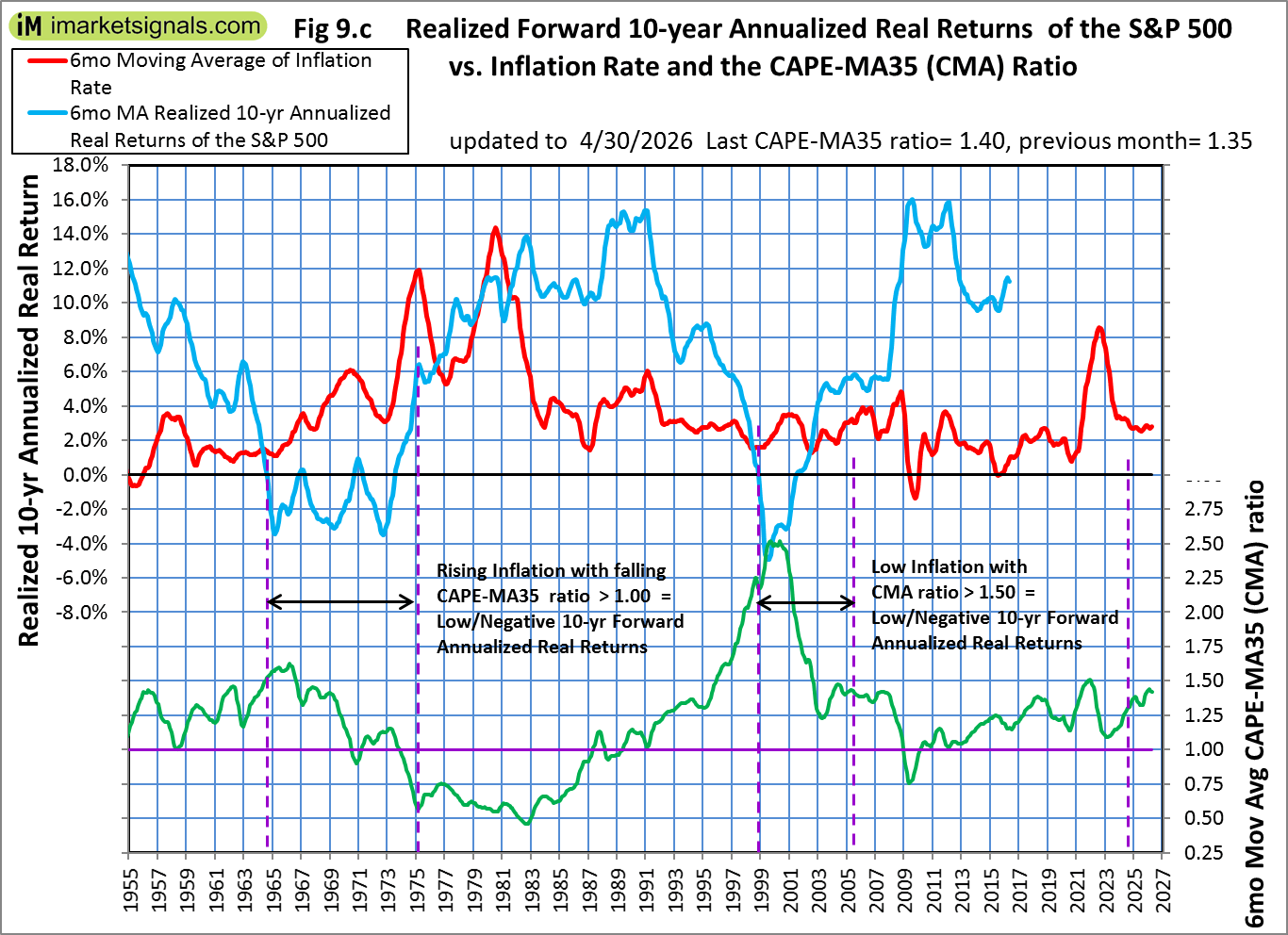 We may be in a rising inflation period with a falling CAPE-MA35 ratio similar to 1964-1973. This implies very low or negative 10 year forward annualized real returns, much lower than the returns indicated by regression analysis shown in the Estimated Forward 10-Year Returns.
.
iM-GT Timer
 The iM-GT Timer, based on Google Search Trends volume indicator is not invested in the stock markets since beginning November 2025. This indicator is described here.
Trade Weighted USD
 Will be updated later, the weekly FRED data series we used was discontinued and replacement series is daily and runs from 2015. We need to adapt our software and graphics first.
TIAA Real Estate Account
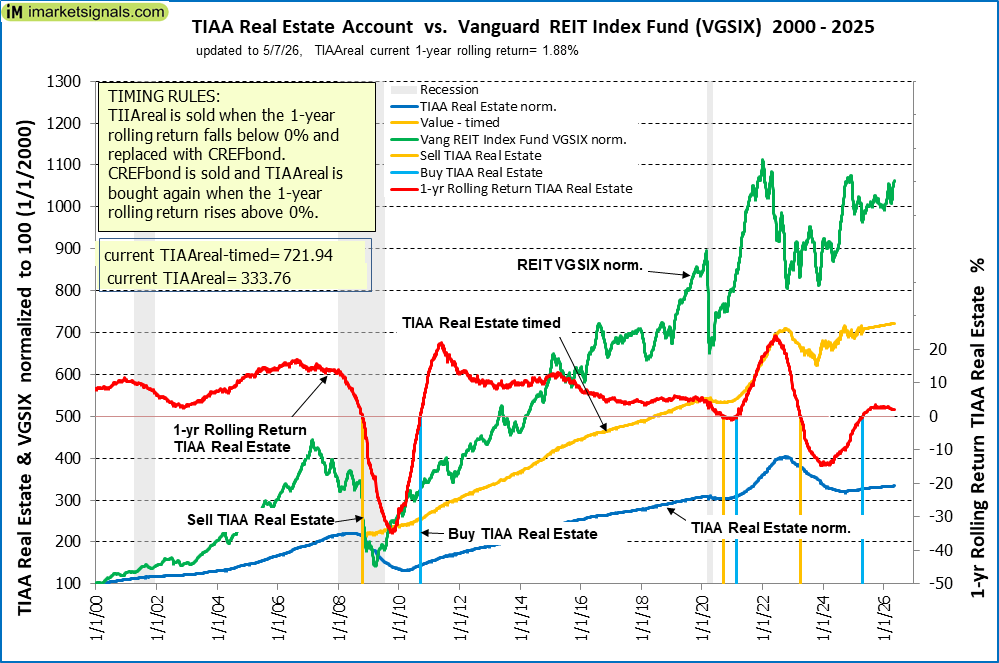 The 1-year rolling return is =1.88% (previous month 2.26%) and is invested in the TIAA Real Estate Account since beginning May 2025.