–

Blog Archives
iM Update – April 19, 2019
Posted in pmp free update
No Sight of Next Recession: Business Cycle Index Update 4/18/2019
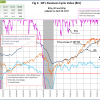
Is your investment strategy protecting your assets from the next recession? Our Business Cycle Index is a tool to help you gauge recession risk.
Posted in BCI
No Sight of Next Recession: Business Cycle Index Update 4/11/2019
Is your investment strategy protecting your assets from the next recession? Our Business Cycle Index is a tool to help you gauge recession risk.
Posted in BCI
How Good Are Target-Date Glidepath Savings Programs During the Accumulation Phase Towards Retirement?
- This study analyzes Yale’s Qualified Default Investment Alternative, a retirement plan with a target-date strategy. The findings also apply in principle to target-date strategy models from Vanguard, Fidelity, and others.
- Yale University’s new retirement plan provides a “Glidepath” Target-Date Plus Service and also allows participants to opt out from it to pick their own investments from a few select funds.
- Backtests (1999-2019) show that Yale’s Glidepath strategy would not have performed particularly well; one would have done better selecting one’s own funds, or by following the traditional 60%Stock-40%Bond constant allocation.
- Retirement savings were calculated for a hypothetical individual making contributions to a retirement fund from Jan-2000 onwards using various allocation strategies, including Yale’s Glidepath and also a reverse glide-path strategy.
- Much higher savings with relatively low risks can be obtained by employing a dynamic investment strategy using models which have moderately different allocations for up- and down-market conditions.
With reference to Section 202(a)(11)(D) of the Investment Advisers Act:
We are Engineers and not Investment Advisers,
read more ...
By the mere act of reading this page and navigating this site you acknowledge, agree to, and abide by the
Terms of Use / Disclaimer