
BCI Update 5-2-13
No sign of an oncoming recession. The BCI climing to a new high of 151.5 after a the gains in the S&P500, outweighing the increase in the continues claims this week. As we have a new high, BCIp is at 100.0
Update 4-26-13
The IBH stock market model is out of the market. The MAC stock market model is invested but the indicators may be rolling over, the bond market model avoids high beta (long) bonds, the yield curve may be flattening, the gold model is not invested, but silver model is invested since last week. The recession indicator COMP is little changed from last week’s level.
Update 4-19-13
The IBH stock market model is out of the market. The MAC stock market model is invested but the indicators may be rolling over, the bond market model avoids high beta (long) bonds, the yield curve may be flattening, and the gold model is not invested, but silver model is invested since last Monday. The recession indicator COMP is higher from last week’s level.
Update 4-12-13
The IBH stock market model is out of the market. The MAC stock market model is invested but the indicators may be rolling over, the bond market model avoids high beta (long) bonds, the yield curve may be flattening, and gold is not invested, but we got a buy for silver today. The recession indicator COMP is higher from last week’s level
Update 4-5-13
The IBH stock market model is out of the market. The MAC stock market model is invested but the indicators may be rolling over, the bond market model avoids high beta (long) bonds despite them peaking today, the yield curve may be flattening, and gold and silver models are not invested. The recession indicator COMP is lower from last week’s level.
Update 3-28-13
The IBH stock market model is out of the market. The MAC stock market model is invested, the bond market model avoids high beta (long) bonds and intermediate duration bonds as well, the yield curve is trending steeper, and gold and silver models are not invested. The recession indicator COMP is almost unchanged from last week’s level.
Update 3-22-13
The IBH model produced a sell signal last week. The MAC stock market model is invested, the bond market model avoids high beta (long) bonds and intermediate duration bonds as well, the yield curve is getting steeper, and gold and silver models are not invested. The recession indicator COMP gained a bit from last week’s level.
Update 3-15-13
The IBH model produced a basic-sell signal early this week and a few days later a sell-A signal. The MAC stock market model is invested, the bond market model avoids high beta (long) bonds and intermediate duration bonds as well, the yield curve is getting steeper, and gold and silver models are not invested. The recession indicator COMP moved higher again.
Update 3-8-13
All the stock market models are invested, the bond market model avoids high beta (long) bonds and intermediate duration bonds as well, the yield curve seems to steepen, and gold and silver models are not invested. The recession indicator COMP moved higher.
Update 3-1-13
All the stock market models are invested, the bond market model avoids high beta (long) bonds, the yield curve seems to steepen, and gold and silver models are not invested.
The most significant event was the decline of COMP.
Update 2-22-13
The BVR-model avoids high beta bonds and the yield curve model expects the yield curve to steepen.
Update 2-8-13
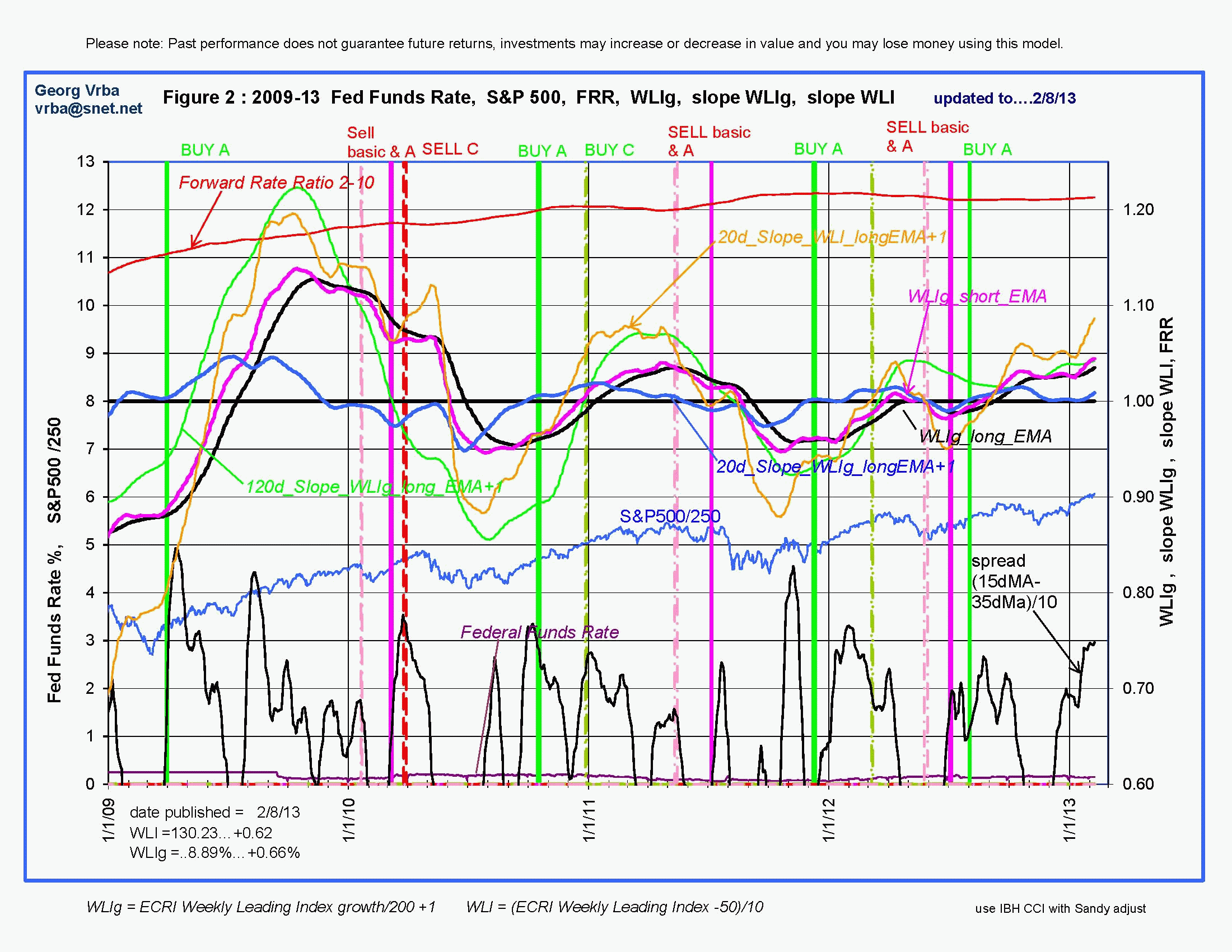 ECRI reported the WLI at a level of 130.2 and the six months smoothed annualized growth WLIg at +8.9%, both numbers are higher from last week, as shown in Fig 2. One can see that the indicator graphs have a generally upward direction now which is usually the pattern for an upward bound market. The model is invested in the S&P500.
Read more >
Update 2-1-13
Gold would have to make a sustained move to $1700 and higher over the next few weeks for a buy signal, which could then appear earliest at the end of March, according to my projections.
Update 1-25-13
Last November the IBH model generated a sell-basic signal and 2 days later a sell A signal, indicating that the model had exited the S&P500. I had expressed concern that the basic sell signal was perhaps a bad signal; the reason for this abnormal signal was that the WLI was negatively affected by the high number of initial claims for unemployment insurance after hurricane Sandy
Update 1-18-13
In my 12-21-12 update I expressed concern that the basic sell signal, of nine weeks ago, was perhaps a bad signal. I have attached the a chart showing the performance after the basic sell signal and how it relates to the envelope of all previous performances after basic sell signals.
Update 1-11-13
Eight weeks ago the IBH model generated a sell-basic signal and 2 days later a sell A signal, indicating that the model had exited the S&P500. So far the S&P has gained since the sell signal. Clearly the sell A signal came to early…..Here are the new rules for a sell A signal.
Update 1-4-13
No recession occurred during 2012, despite ECRI claiming that we have had a recession since the middle of 2012. The COMP indicator is far away from a recession signal.
Update 12-28-12
The Yield Curve:: The trend seems to be up – the model expects the yield curve to steepen. FLAT and STPP are ETNs. STPP profits from a steepening yield curve and FLAT increases in value when the yield curve flattens.
Update 12-21-12
The BVR has declined from last week, indicating losses for long bonds over this period. In the longer term BVR will reach the long-term trendline and long-bond investors will have suffered considerable losses by then.
Update 12-14-12
On Wednesday it was reported that the Fed would extend its easing measures until the unemployment rate declined to 6.5%. According to a projection from the unemployment recession model it will take at least to the first quarter of 2014 for this to occur.
Update 12-07-12
The various indicator lines, of the IBH model, after peaking appear to be heading lower. So far the S&P has gained since the earlier sell signal.
Update 11-23-12
No recession from 1969 onwards has ever started when the COMP indicator was at the present level.
Update 11-16-12
The IBH model generated a basic sell signal two days ago and a sell A signal today, all as per yesterday’s flash update based on the shadow WLI.
Update 11-09-12
All the indicator lines point to the model staying invested, although there is now an indication of a possible sell-basic signal coming.